Updated November 2026 · Honest Little Apps

Stop All-or-Nothing. Start Five Minutes.

For adults strength training on prescribed GLP-1 medication. Pick what sounds like you; get the fix.

Which sounds most like you?

Tap one. You'll see the mistake hiding in it, the fix, and a five-minute version for tonight.

Download on the App Store Free on iPhoneMake it a habit with Sturdy

What are the most common strength training mistakes on GLP-1?

The big ones are skipping strength work in favor of walking, starting too heavy, letting protein slide on low-appetite days, quitting after a missed week, and judging progress only by the scale. Each has a small, specific fix, and most of the fixes make the week easier, not harder.

Why it matters: a 2025 joint advisory from four US nutrition and obesity groups (the American College of Lifestyle Medicine, the American Society for Nutrition, the Obesity Medicine Association and The Obesity Society) lists muscle and bone loss among the main challenges of GLP-1 treatment, and names resistance training plus an appropriate diet as the way to help preserve them. Below are seven mistakes we see the most, written as poster rules you can actually remember.

  1. Walking only. Add two strength days.

    Walking is great, and it isn't strength training. The CDC's adult guidelines ask for muscle-strengthening activity on 2 or more days a week that works legs, hips, back, abdomen, chest, shoulders and arms, on top of 150 minutes of moderate activity.

    Source: CDC, page last reviewed December 2023.

  2. Going all-out on day one. One set of 12 to 15.

    Mayo Clinic's strength training guide (June 2026) says a single set of 12 to 15 repetitions with a weight that tires the muscle by the end can build muscle efficiently in most people. More sets can come later.

    Source: Mayo Clinic, June 2026.

  3. Training the same muscles daily. Rest them a day.

    The same Mayo Clinic guide recommends resting one full day between exercising each specific muscle group. Legs Monday, upper body Tuesday works. Legs every day doesn't.

    Source: Mayo Clinic, June 2026.

  4. Forgetting protein when appetite drops. Log it, even roughly.

    The 2025 advisory flags nutrient shortfalls from eating less as a real risk on GLP-1 medication. Ask your clinician or a registered dietitian what protein target fits you, then keep a simple record. We won't give you a number here; it depends on you.

    Source: Mozaffarian et al., Am J Clin Nutr, 2025.

  5. Missing a week, then quitting. Restart with five minutes.

    The CDC's guidelines for older adults put it plainly: some physical activity is better than none. A five-minute session after a missed week counts. A perfect plan you abandoned doesn't.

    Source: CDC, page last reviewed December 2025.

  6. Watching only the scale. Track what your legs can do.

    A 2024 review in Diabetes, Obesity and Metabolism notes that "lean mass" includes organs, bone and fluid, not just muscle, and calls for more attention to strength and function. A repeatable check, like the CDC's 30-second chair stand, tells you more about function than the scale does.

    Source: Neeland et al., 2024; CDC STEADI.

  7. Pushing through pain or dizziness. Stop, and call.

    Mayo Clinic: if an exercise causes pain, stop the exercise. Nausea and diarrhea were the most common side effects in the STEP 1 semaglutide trial (2021), usually mild to moderate and easing with time. If you feel dizzy, faint or unwell while training, stop and talk to your clinician.

    Source: Mayo Clinic; Wilding et al., NEJM, 2021.

The fix for most GLP-1 training mistakes is smaller, steadier and written down.

Your five-minute fix, in full

The picker at the top gives you a one-line version. Here's the session it points to, with nothing fancy. Use a sturdy chair without wheels. Warm up for a few minutes first; Mayo Clinic suggests brisk walking.

Tonight's five minutes

  1. Sit-to-stands from a chair: slow, 10 to 12 times
  2. Heel raises holding the chair back: 12 to 15 times
  3. Standing march holding the counter: 30 seconds
  4. Repeat once if it felt fine. Stop if anything hurts.

That's it. If tonight felt easy, next time add a third round or hold the stand for a slow count of three.

A five-minute session you do beats a 45-minute session you plan.

A week, told plainly

This is a composite, not a real person. A 54-year-old teacher starts weekly injections in September and decides to "do it properly": three 45-minute gym sessions. Week one goes fine. In week two, a parent evening and a low-appetite Thursday knock out two sessions, and by week three the plan feels like a debt.

What changes things isn't more willpower. It's two 20-minute strength sessions on fixed days, a five-minute version for evenings that go sideways, and protein logged at breakfast, the meal she still wants. Missed days stay blank, not red.

A plan that survives a bad week is the one that keeps your strength.
The same week, two ways

Bars show minutes of strength work. Same person, same busy week. Hatched days were missed.

All-or-nothing

Three 45-minute sessions planned. One done. Two missed sessions feel like failure.

Small and steady

Two 20-minute sessions plus three five-minute ones. 55 minutes, and nothing to "catch up".

Count the minutes you did, not the sessions you missed.

Honest limits

  • Sturdy is for adults using prescribed medication under medical care. It's a planner and log. It doesn't diagnose, treat or give medication advice, and it never suggests doses or changes your schedule.
  • It won't tell you how much protein to eat. You set your own target, or switch to simple meal checkmarks, or turn the goal off.
  • Its chair-stand check shows your history only. No scores, no age norms, no medical conclusions. That's on purpose, and it means the app won't tell you whether a result is "good".
  • Who should pick something else: if you have a recent injury or fracture, dizziness or pain, or a condition your clinician wants supervised, start with your clinician or a physical therapist instead of an app. And if you already lift steadily and track in a notebook, keep doing that.

An app can hold the plan. Your clinician holds the medical decisions.

How Sturdy fixes these, in three steps

Real App Store screenshots, marked up by us.

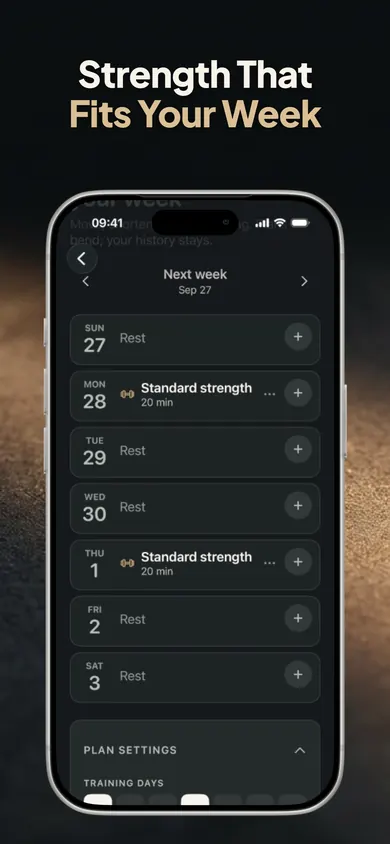
Sturdy weekly plan with Standard strength on two days and rest days between Rest days built in
Step 1 · Plan the weekPick training days, session length, equipment and experience. Move, shorten, skip or repeat a session anytime. Missed days are simply unfilled.
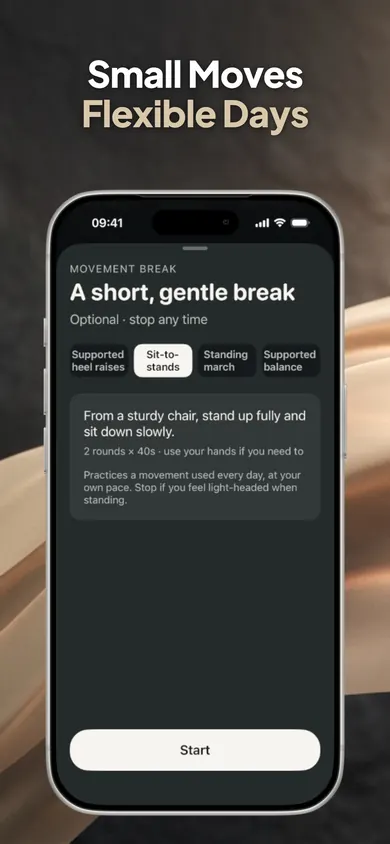
Sturdy movement break screen with sit-to-stands, supported heel raises, standing march and supported balance The five-minute version
Step 2 · Do the short oneQuick Movement sessions run about five minutes. Flag sore areas first and those movements are swapped out. Difficulty changes only when you choose.
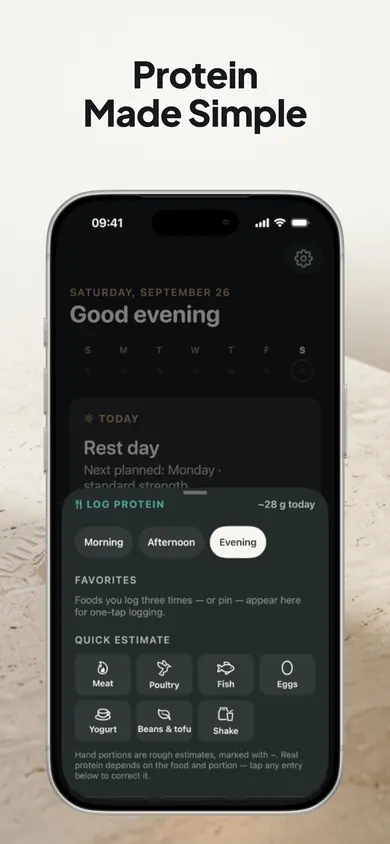
Sturdy protein log by meal period with quick estimates Log by meal, roughly
Step 3 · Keep protein simpleLog by meal period with quick-add foods, or grams from a label. Hand-portion estimates are labeled as estimates, and you can correct them.

Our design decision: a missed day in Sturdy is blank, never a red mark, because the week you restart matters more than the week you missed. No account, no ads, no tracking; records stay on your iPhone. This is general information, not medical advice. Talk to your clinician.

Fewer mistakes. Stronger weeks.

Weekly planning, all three workout types and protein logging are free.

Download on the App Store Free on iPhoneMake it a habit with Sturdy

More from Small Health Habits