Does GLP-1 medication cause muscle loss after 60?
Some of the weight lost on GLP-1 medication is lean mass, and that matters more after 60, when muscle is already harder to keep. Strength training on at least two days a week, enough protein and a regular strength check are the three habits experts point to.
A 2024 review in Diabetes, Obesity and Metabolism found that in clinical trials of GLP-1-based medicines, lean mass ranged from about 15% or less to 40–60% of the total weight lost. It also says that older age can raise the risk of sarcopenia (age-related muscle loss). Mayo Clinic's June 2026 guide notes that lean muscle mass and strength tend to decline with age.
After 60, losing weight on GLP-1 is only half the job. Keeping your legs strong is the other half.
The GLP-1 over-60 muscle checklist
A 2025 joint advisory from four US nutrition and obesity groups recommends a baseline exam that includes muscle strength, function and body composition when GLP-1 treatment starts.
The CDC's guidelines for adults 65 and older (reviewed December 2025) ask for muscle-strengthening on at least 2 days a week.
The same CDC page lists balance activities for older adults, alongside 150 minutes of moderate activity.
Mayo Clinic says a single set with a weight that tires the muscle by the end can build muscle in most people.
Mayo Clinic recommends one full rest day between sessions for the same muscles.
The 2025 advisory names nutrient shortfalls and muscle loss as risks. Your target depends on you, so ask your clinician or a registered dietitian.
The same advisory lists bone loss next to muscle loss as a challenge of GLP-1 treatment.
A chair without wheels, a counter, a wall. Balance work is safer with a hand nearby.
Use the timer below. The same test, same chair, written down, is a simple record of what your legs can do.
Pain, dizziness or feeling faint means stop. Mayo Clinic: if an exercise causes pain, stop the exercise. Then talk to your clinician.
Ten checks, one month. Tick what's done and bring the rest to your next appointment.
Try the 30-second chair stand
This is the check the CDC's STEADI program uses for leg strength and endurance. The CDC instructions: use a straight-backed chair with no armrests, cross your arms with hands on opposite shoulders, keep your feet flat, and stand up fully then sit back down for 30 seconds. If you need your arms to stand, stop: the score is 0. Have someone stand next to you.
| Age | Women: below average if under | Men: below average if under |
|---|
Source: CDC STEADI, "30-Second Chair Stand". The CDC says a below-average score indicates a risk for falls. It's a screening check, not a diagnosis. Share any result with your clinician.
The same chair, every month, is the most honest strength record you can keep at home.
What the scale shows vs. what your legs show
The scale
- Total weight only
- Can't separate muscle, fat, water or bone
- Moves daily for many reasons
A chair stand count
- What your legs can do
- Same test, same chair, comparable
- Takes 30 seconds
Your weight tells you what's leaving. Your chair stand tells you what's staying.
Honest limits
Sturdy is for adults using prescribed medication under medical care. It's a planner and self-tracking log. It doesn't diagnose, treat or prevent any condition, and it never suggests doses or changes your medication schedule.
The app doesn't use age norms. Its chair-stand check (based on the CDC STEADI protocol) records your results, conditions and notes and shows your history, without scores or medical conclusions. We show the CDC table on this page so you can discuss it with your clinician; inside the app, it's your own history only.
Who should pick something else: if you've had a recent fall, fracture or injury, feel dizzy, or have a condition your clinician wants supervised, ask about physical therapy or a supervised program first. If you already train regularly with a coach, keep doing that.
No scores, no norms in the app: just what you did, written down.
A composite story
This is not a real person. A 67-year-old retired bus driver starts a GLP-1 medication in spring. By summer he's lighter and pleased, but getting out of the low sofa takes a push from both arms. His daughter times him on a kitchen chair: 9 stands in 30 seconds.
He doesn't join a gym. He plans two 20-minute strength sessions a week and a five-minute version for the days his knee complains, and logs breakfast protein, the meal he still enjoys. He brings his monthly chair-stand counts to his next appointment, where the conversation turns to legs, not just the scale.
The number worth bringing to the appointment isn't always a weight.
How it works in Sturdy
Build a week that fits
Choose training days, session length, equipment and experience. Move, shorten, skip or repeat any session. Missed days are simply unfilled.Follow short guided sessions
Quick Movement (about five minutes), Standard Strength or Recovery & Mobility, with a timer, rep guidance and rest breaks. Flag sore areas and those movements are swapped out.Keep a record for appointments
Log protein, record optional chair-stand check-ins, and make a PDF summary of the last 30 days. You choose every section.
Real screens from the App Store
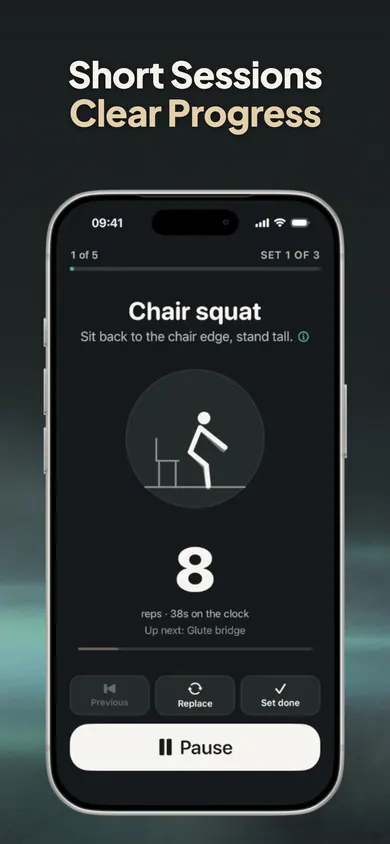
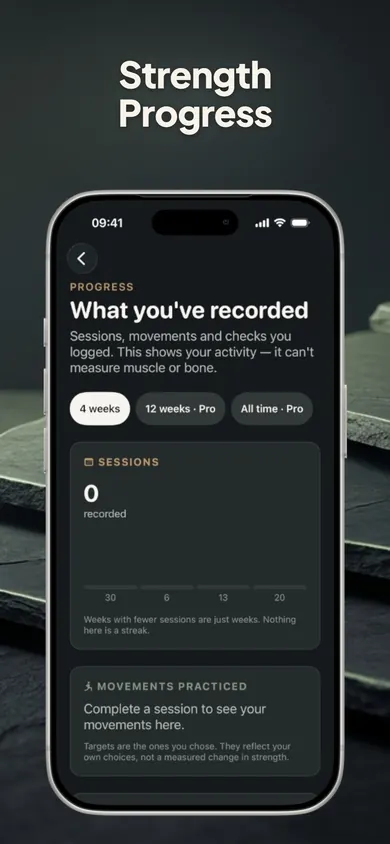
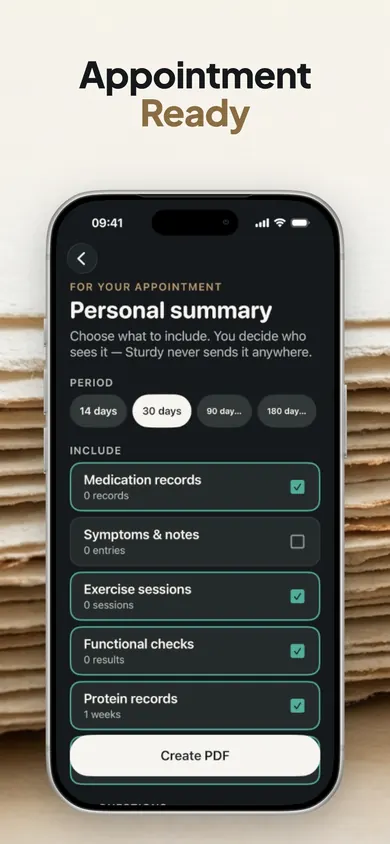
Our design decision: Sturdy stores your records on your iPhone, with no account, no ads and no tracking, and it marks every summary as self-recorded. This is general information, not medical advice. Talk to your clinician.