Small Health HabitsSleepward guide

Updated November 2026 · 11 questions answered

Your hour back. Bed on time tonight.

For parents who stay up for themselves after bedtime: three taps plan a protected evening that still ends in sleep.

Question 1 of 3

When are the kids asleep?

When does your alarm go off?

What usually eats your night?

    Download on the App Store Free on iPhoneStart on your iPhone
    11 answers below

    The basics

    Revenge bedtime procrastination, explained for parents

    What is revenge bedtime procrastination?

    It's staying up later than you meant to, with nothing actually stopping you from going to bed, because the late evening is the only time that feels like yours. Researchers at Utrecht University defined bedtime procrastination in 2014 as failing to go to bed at the intended time when no external circumstances prevent it.

    The "revenge" part is newer slang: you're taking back the hours the day took from you.

    Why do parents do it so much?

    Because for many parents, the hour after the kids fall asleep is the first unclaimed time of the day. Nobody needs a snack, a ride or an answer. Cleveland Clinic's 2025 explainer links the habit to feeling stressed, pressed for free time and powerless over your days.

    That's not a character flaw. It's a reasonable response to a day with no gaps in it, and it's why "just go to bed earlier" rarely works on its own.

    Is revenge bedtime procrastination actually bad for you?

    It costs sleep, and that adds up. In the 2014 Utrecht study, people who reported more bedtime procrastination also reported more insufficient sleep. The CDC says adults aged 18 to 60 need 7 or more hours a night, and a late bedtime with a fixed school-run alarm eats straight into that.

    One honest caveat: that study was a survey of 177 people, so it shows a link, not proof that one causes the other.

    The problem isn't wanting time for yourself. It's time with no ending.

    Inside the app

    What a protected evening looks like on screen

    Sleepward is our bedtime routine app, made for people who stay up late because the evening is the only time that feels like theirs. These are the real App Store screenshots.

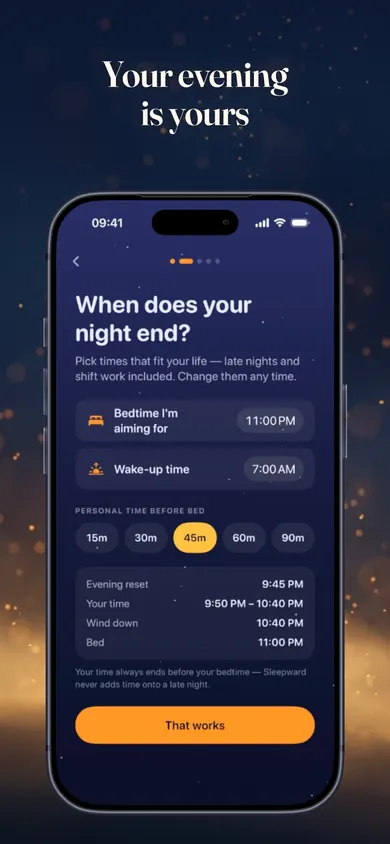
    Sleepward screen asking when your night ends, with bedtime 11:00 pm, wake-up 7:00 am and a 45-minute personal time block
    Set bedtime and wake time, then pick 15 to 90 minutes of personal time.
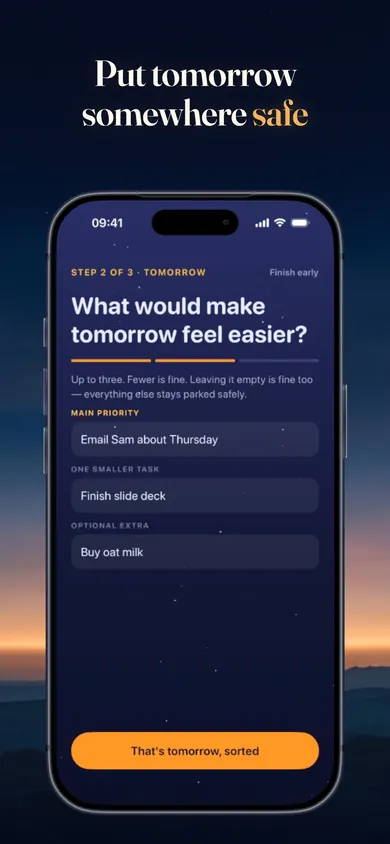
    Sleepward tomorrow screen with one main thing, one smaller task and one optional extra
    Up to three things for tomorrow, so the rest can wait.
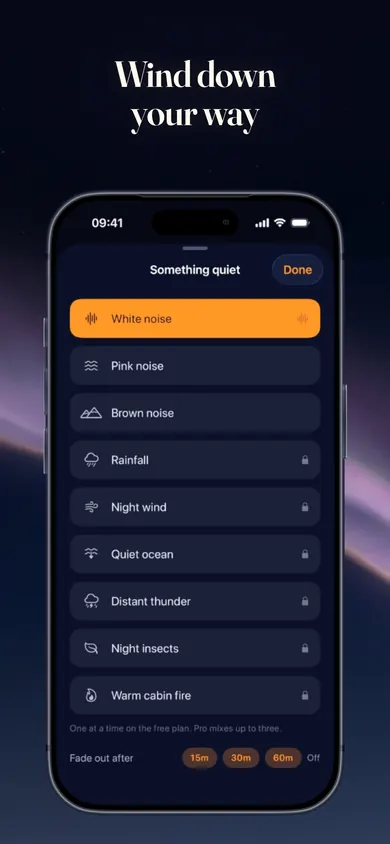
    Sleepward wind-down sounds list with white, pink and brown noise and a fade-out timer
    White, pink and brown noise with a fade-out timer, free.

    A typical Tuesday

    9:40 p.m., finally on the couch

    Picture a parent whose kids are down at 8:30. Dishes, lunches, a permission slip. By 9:40 they sit down for the first time all day, open their phone "for a minute," and look up at 12:50.

    Now the same Tuesday with a plan. At 9:40 they spend four minutes emptying their head into a list and picking tomorrow's one main thing. Then they get a real 45 minutes, set aside on purpose. At 10:30 the screen starts to dim. Brown noise, phone on the charger, asleep before 11.

    Same parent. Same couch. The evening didn't shrink; it just got an ending.

    An illustrative scenario we wrote to show the idea, not a real user's story.

    How to stop

    How to stop revenge bedtime procrastination

    How do I stop revenge bedtime procrastination without giving up my me-time?

    Protect a smaller, real block of me-time instead of an open-ended one. Decide when your free time starts and ends, give it a length (even 30 minutes), and put a short wind-down after it. A planned hour that ends on time beats a vague evening that drifts to 1 a.m.

    What time should I go to bed to get 7 hours of sleep?

    Count back about 7 and a half hours from your alarm. That leaves room to fall asleep and still gets you near the CDC's 7-hour minimum for adults. A 6:30 a.m. alarm means lights out around 11:00 p.m., so wind-down starts around 10:30 p.m.

    AlarmLights outStart wind-down
    5:30 am10:00 pm9:30 pm
    6:00 am10:30 pm10:00 pm
    6:30 am11:00 pm10:30 pm
    7:00 am11:30 pm11:00 pm
    7:30 am12:00 am11:30 pm

    Does writing a to-do list before bed help?

    There's some evidence it can. In a 2018 Baylor University study of 57 young adults, published in the Journal of Experimental Psychology: General, people who spent five minutes writing a to-do list for the coming days fell asleep faster than people who wrote about tasks they had already finished.

    It was a small lab study of university students, not parents, so treat it as a promising idea rather than a guarantee.

    Give your free time a start, a length and an end, and it stops needing to be stolen.

    How Sleepward turns that into three steps

    1. Close the dayA four-minute evening reset. Write everything into a private Brain Dump, then pick up to three things for tomorrow: one main thing, one small task, one optional extra. Or none.
    2. Take Your HourA protected stretch of 15, 30, 45 or 60 minutes, or your own length. It always ends before the bedtime you chose. Show a countdown only if you want one.
    3. Wind downA gradually darkening screen, a short routine you can edit (dim lights, read, prepare tomorrow's things) and free white, pink or brown noise with a fade-out timer. Then put the phone down.

    Phones, partners and when to get help

    More questions parents ask

    Do I have to give up my phone at night?

    Not all evening, but the last stretch matters. The CDC suggests turning off electronic devices at least 30 minutes before bedtime, and Mayo Clinic advises avoiding long use of light-emitting screens just before bed. Keep your phone for your free time, then put it down when wind-down starts.

    My partner and I both stay up late. Does that change anything?

    It helps to agree on the end of the evening together. Pick a shared wind-down time, then split the free time however suits you: a show together, or separate hours in separate rooms. One of you going to bed on time is easier when the other isn't still mid-episode.

    When is late-night staying up more than a habit?

    If you go to bed on time and still lie awake, wake often, or feel exhausted most days, that's worth raising with a clinician. Mayo Clinic says that if you often have trouble sleeping, you should contact your health care provider.

    If bedtime is on time and sleep still won't come, that's a question for a clinician, not an app.

    About Sleepward

    Is Sleepward right for you?

    Is Sleepward free?

    Yes. The evening reset, Brain Dump, tomorrow's three things, Your Hour, wind-down, routines, Minimal Mode, sleep logs, morning check-ins and white, pink and brown noise are free forever. Sleepward Pro is optional and adds the full nighttime world and studio soundscapes.

    Does Sleepward score my sleep?

    No. Sleepward never scores your sleep and never breaks a chain. Logging bed and wake times is optional, estimates are clearly labeled, it can read sleep from Apple Health without writing to it, and you can hide all numbers any time.

    One design decision

    Your Hour always ends before the bedtime you chose. We built it that way because the whole problem is free time with no ending, so the app gives it one.

    One honest limit

    Sleepward doesn't block other apps, and its wake-up reminder is a notification, not a system alarm; Silent mode or Focus can quiet it. Keep your Clock alarm for the school run.

    Who should pick something else

    If one app swallows your evening every night, an app blocker may help more. If you want detailed sleep-stage tracking, a wearable-based tracker fits better; Sleepward deliberately keeps numbers light and optional.

    This is general information, not medical advice. Talk to your clinician. Sleepward is a personal routine and journaling tool, not a medical device, and it does not diagnose or treat insomnia or any sleep condition.

    Keep the evening. Give it an ending.

    A four-minute reset, a protected hour and a calm wind-down. No account, no ads, and your notes stay on your iPhone.

    Download on the App Store Free on iPhoneStart on your iPhone

    More from Small Health Habits