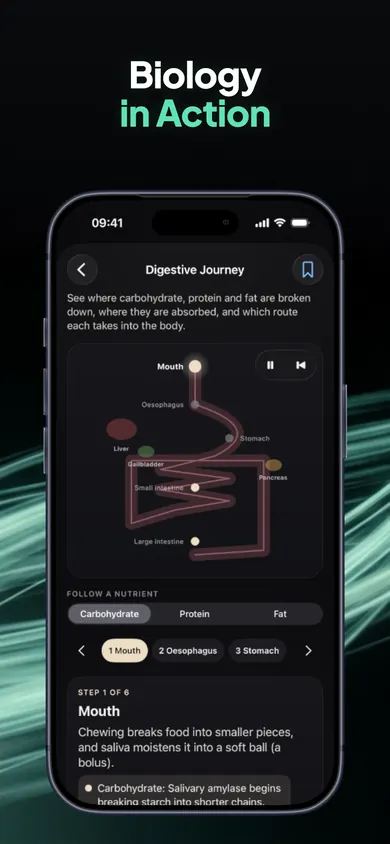
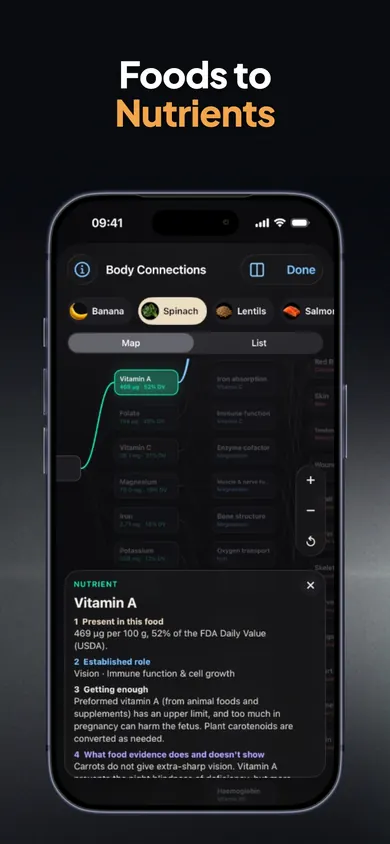
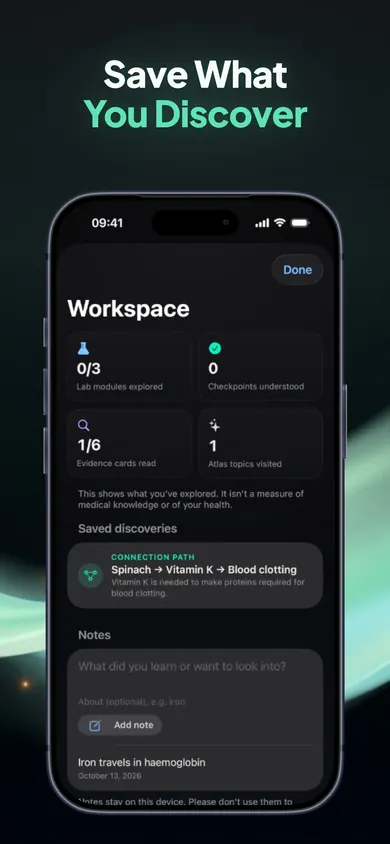
An illustration, not a real person: someone reads the word "ileum" on a lab note and has no idea where that is. In Body Unpacked they open the B12 journey and watch it travel: swallowed, freed in the stomach, passed to intrinsic factor, carried down the full length of the small intestine, absorbed at the far end. Then the quick check asks where it's absorbed. They get it right, save the path to their workspace with a note, and bring that question to their next appointment.
Where is vitamin B12 absorbed?
Vitamin B12 is absorbed in the distal ileum, the very last stretch of the small intestine, but only after a stomach-made protein called intrinsic factor has picked it up. It takes three hand-offs to get there: food protein to haptocorrin, haptocorrin to intrinsic factor, then intrinsic factor to receptors in the ileum.
That's the short version from the NIH Office of Dietary Supplements B12 fact sheet (updated March 26, 2024), which describes the complex being "absorbed in the distal ileum by receptor-mediated endocytosis." A 2022 review in Vitamins and Hormones fills in the middle: the hand-over to intrinsic factor happens in the duodenum, and a receptor called cubilin, with its partner amnionless, takes B12 up in the ileum.
B12 is swallowed at the top and absorbed at the very bottom of the small intestine. Everything in between is a relay.
The vitamin B12 absorption pathway, step by step
- Mouth
Picked up by haptocorrin
Saliva carries haptocorrin, a B12-binding protein. Freed B12 binds to it, according to the NIH fact sheet.
- Stomach
Released from food
Hydrochloric acid and an enzyme called gastric protease free more B12 from the food it's bound to. The stomach lining also makes intrinsic factor, the protein B12 needs later.
- Duodenum
The hand-over
Pancreatic enzymes break down haptocorrin and the pH shifts, so B12 moves over to intrinsic factor (2022 review).
- Distal ileum
Absorbed
The B12 and intrinsic factor pair docks on its receptor at the end of the small intestine and is taken in.
- Blood and liver
Carried and stored
A third protein, transcobalamin, carries B12 in the blood. The body stores about 1 to 5 mg, and some B12 from the liver goes out in bile and is reabsorbed.
Three proteins, one vitamin: haptocorrin, intrinsic factor, transcobalamin.
Who this page is not for
- If you have numbness, tingling, balance problems or ongoing tiredness, talk to a clinician first. The NIH consumer fact sheet lists these among possible signs of low B12, and a doctor can test your level.
- If you want to know which supplement or dose to take, this isn't that page, and Body Unpacked won't tell you either. It gives no individual supplement or medication advice.
- If you need clinically reviewed content, note that Body Unpacked's content is checked by the developer against cited public sources and hasn't been independently reviewed by a clinician.
How Body Unpacked shows a nutrient journey
Pick a nutrient
Fourteen nutrients each have their own journey, B12 included.
Follow it on the body map
An animated map shows where it's absorbed, what carries it, where it's stored, where it works and how it leaves.
Check the source
Each journey cites its source and ends with a quick check, so you know you've got it.
Our design decision: missing data is shown as missing, never as zero, and every number shows where it comes from. All learning content is bundled and works offline.
Where can B12 absorption go wrong?
Tap a step to see what can interrupt it. Each line comes from the NIH fact sheets or the 2022 review linked above.
| Step | Needs | Can be disrupted by |
|---|---|---|
| Intake | Animal foods or fortified foods | Little or no animal food |
| Release | Stomach acid, protease | Low acid, acid-reducing drugs |
| Hand-over | Intrinsic factor | Pernicious anemia, some surgeries |
| Uptake | A working distal ileum | Ileal disease or removal |
This is general information, not medical advice. Talk to your clinician.
B12 absorption questions
What part of the small intestine absorbs vitamin B12?
The distal ileum, the last part of the small intestine. B12 is taken up there bound to intrinsic factor, by receptor-mediated endocytosis, as the NIH Office of Dietary Supplements describes it.
What is intrinsic factor?
A protein made in the stomach that binds vitamin B12 so the ileum can absorb it. People with pernicious anemia don't make the intrinsic factor needed to absorb B12.
How much vitamin B12 do adults need?
The NIH lists a Recommended Dietary Allowance of 2.4 mcg a day for adults, 2.6 mcg during pregnancy and 2.8 mcg while breastfeeding.
Does the body absorb all the B12 in a big dose?
No. The NIH fact sheet says about 50% is absorbed from doses under 1 to 2 mcg, but only about 2% from a 500 mcg dose, because the intrinsic factor route fills up.
Why do older adults absorb less B12 from food?
Many older adults don't have enough hydrochloric acid in the stomach to free B12 from food. The NIH says people over 50 should get most of their B12 from fortified foods or supplements, which don't need that release step.
A short story from the atlas
Knowing where something happens makes the next conversation shorter.
What it looks like
Real App Store screenshots.