Before handoff
Finish a glass at home or in the car. It's the one moment nobody can take from you. 8 oz
First chance
Meds are out, call lights are quiet for four minutes. Half the bottle, standing up, in the break room where it's allowed. ½ bottle
The rush
An admission, a fall risk, a family with questions. Nothing to drink, and that's fine because it was planned for.
Lunch
Finish the bottle, refill it before sitting down so the next one is ready. One tap logs it. rest of bottle
Second break
The afternoon slump. Half the fresh bottle. Hydration Pace says "A little behind," which is information, not a lecture. ½ bottle
After report
Finish what's left before the drive home, not three bottles at midnight. rest of bottle
How do you drink more water on a 12-hour shift?
Stop relying on thirst and spare minutes. Pick the four or five moments you're almost guaranteed (handoff, first break, lunch, second break, end of shift) and split your shift goal across them, with a bottle sized so each moment is one clear amount. Then log it in one tap so you can see what's left.
That's the whole method. The planner above does the math: choose how much you want to drink at work, the bottle you actually carry, and how many moments you realistically get. It tells you how much each moment needs and how many refills that is.
A shift doesn't need more willpower. It needs fewer, bigger, planned drinks.
Honest limits before you start
We'd rather say these plainly than have you find them on a busy Tuesday.
Dropkin can't create breaks
No app can. It can make the breaks you do get count, and show what's left.
Some floors ban bottles
OSHA's bloodborne pathogens standard (29 CFR 1910.1030) prohibits drinking in work areas with a reasonable likelihood of exposure. Your bottle may live in the break room. Plan around that.
Phone reminders need a phone
If you can't check your phone on the floor, reminders help less. Dropkin's Apple Watch app logs from your wrist; fixed anchors help most.
It doesn't set your needs
Dropkin tracks a goal you choose. It isn't a medical device and doesn't tell you how much you need.
Who should pick something else: if a clinician has given you a fluid limit (for example for heart or kidney conditions), follow their plan, not this page. And if a marked bottle with times written on it works for you, keep it. It's free and needs no battery.
Ways to remember water on shift, compared
Four common approaches, with what each is good and bad at. One of them is ours, so weigh that.
Phone alarms
Free, already there.
Ring when you're mid-task; keep ringing after you drank.
Marked bottle
Visible, no screen needed.
One bottle only; no record of the day.
Thirst alone
Zero setup.
Easy to ignore when you're busy and the water's in another room.
Dropkin (ours)
One-tap bottle logging, reminders only in your hours that stay quiet when you're on pace, Watch app.
iPhone only; needs a few minutes of setup.
Questions nurses and shift workers ask
How much water should I drink during a 12-hour shift?
There is no single number for everyone. Mayo Clinic says the average healthy adult gets enough with about 2.7 to 3.7 liters of total fluid a day, with roughly 20% coming from food. A 12-hour shift covers a big part of your waking day, so many people aim to drink a meaningful share of their own daily goal at work. Your clinician can help if you have a condition that affects fluids.
Can I keep a water bottle at the nurses' station?
It depends on your unit. OSHA's bloodborne pathogens standard prohibits eating and drinking in work areas where there is a reasonable likelihood of occupational exposure, so many hospitals set a designated spot such as a break room. Ask your manager or infection prevention team where a bottle can live.
Is it bad to chug a lot of water at once to catch up?
Big catch-up amounts are uncomfortable and not needed. NIOSH heat guidance says fluid intake generally should not exceed 6 cups an hour. Spreading water across your break moments is easier on you than saving it all for the drive home.
Will water reminders work if I can't look at my phone on the floor?
Partly. Phone reminders only help if you see them. Dropkin's reminders arrive only during the hours you set and stay quiet when you are on pace, and its Apple Watch app lets you log from your wrist. If your workplace limits phones and watches, anchoring water to fixed moments like handoff and lunch matters more than any reminder.
Is Dropkin free?
Yes. The full water tracker is free: unlimited logging, saved vessels, reminders, Hydration Pace, widgets, Apple Watch, Shortcuts and 30-day history. Optional Pro adds extra worlds, styles and longer history.
Sources: Mayo Clinic, "Water: How much should you drink every day?" (January 2026); NIOSH heat stress workplace recommendations (reviewed July 2026).
Your 12-hour shift water plan, written out
This updates from the planner at the top. It's built on the anchor moments of a typical 7a–7p shift; slide the times to match yours.
Five drinks you can count beat twenty sips you forget.
A 7a–7p shift where water actually happens
This is a composite day, the kind of shift we built Dropkin's Work Bottle around. Not a real person, just a real pattern.
Shift work does make this harder, and research backs that up. A 2013 study in the International Journal of Emergency Medicine followed 43 emergency department physicians and nurses over 172 shifts and found hydration had dropped by the end of shift, with lower fluid intake a significant predictor. Both groups averaged roughly 3–4 cups per 8 hours.
Plan your water around your breaks, not around your good intentions.
How it works in Dropkin, in three steps
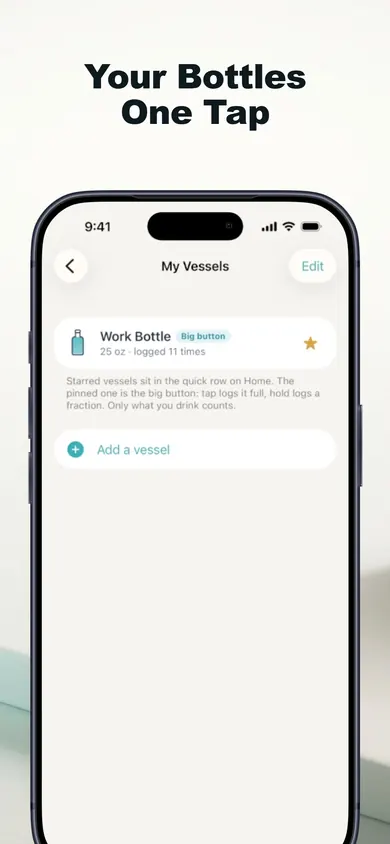
Save your work bottle
Add it once with its real capacity, in ounces or mL, and pin it as the big button. Half and quarter buttons sit right beside it.
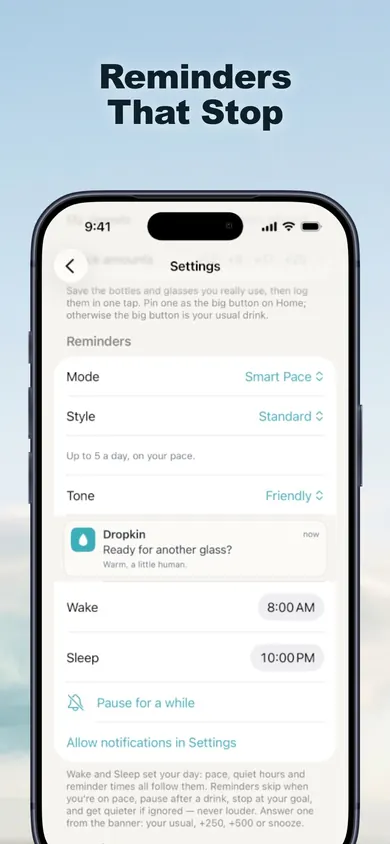
Set your shift hours
Reminders only arrive during your hours, stay quiet when you're on pace, wait after each drink and stop once you reach your goal.
Tap at each anchor
One tap logs the bottle, from the app, a widget, Siri or your Apple Watch. Every log has Undo, and the vessel fills as you go.
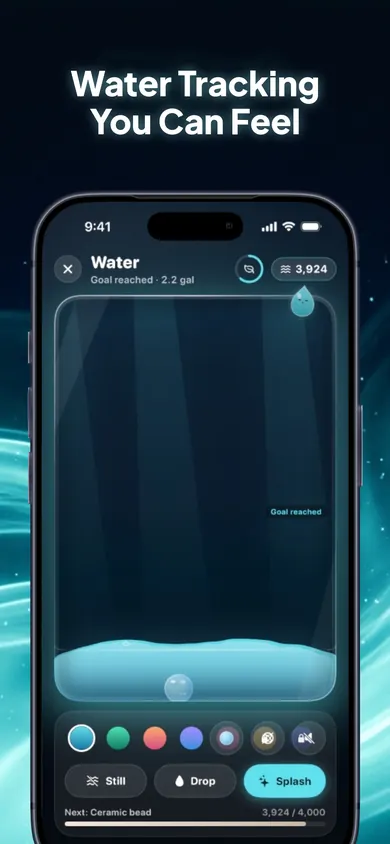
Our design decision: reminders get quieter, never louder, if you ignore them, and nothing wilts or resets after a missed day. Extra water past your goal earns nothing, so there's never a reason to overdo it. This is general information, not medical advice. Talk to your clinician.
Five planned drinks. One tap each.
Save your work bottle, set your shift hours, and let the breaks you get do the work.
More from Small Health Habits
- When will my prescription run out? A refill calculatorEnter pills on hand and pills per day to see the date each prescription runs out, a call-the-pharmacy date, and a timeline for up to five medicines.
- Nutrition apps without calorie counting, comparedWant to learn what food does instead of counting it? An honest November 2026 comparison of four iPhone nutrition apps, ours included.
- Free quit-vaping apps without a subscription, comparedWhich quit-vaping apps are actually free? We checked five iPhone listings and three free programs in November 2026. Ours is included, and disclosed.
- Quitting vaping over the holidays: a 2026 planA 2026 holiday quit-vaping plan: a six-step prep checklist, a party plan card you can save, and dated advice for Nov 19 through New Year's Eve.